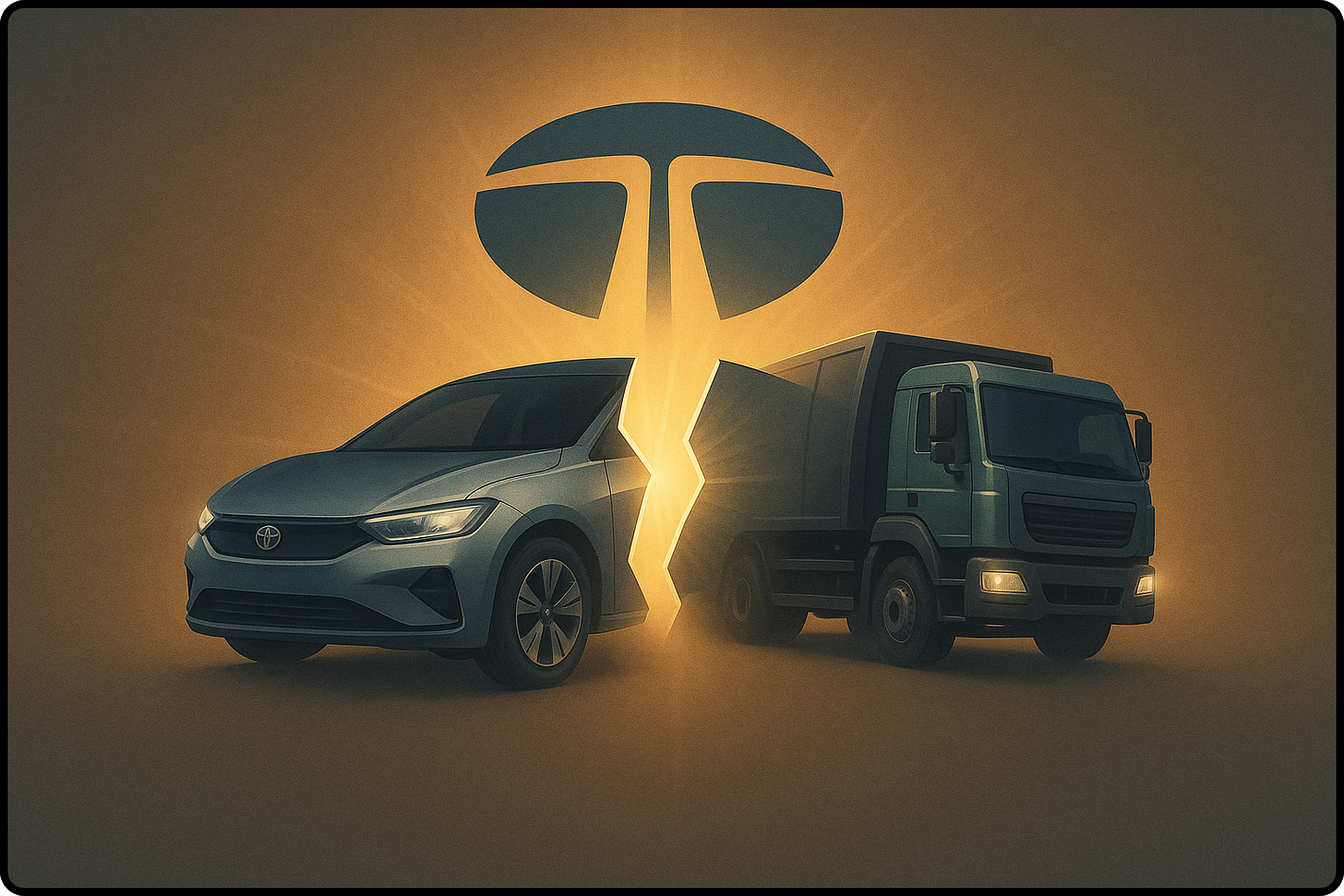
The Indian automobile industry is evolving rapidly, and one of the biggest corporate developments attracting investor attention is the tata motors demerger commercial vehicles initiative. Tata Motors has long been one of India’s most respected automobile manufacturers, producing passenger cars, commercial vehicles, electric vehicles, and luxury automobiles through Jaguar Land Rover. As the automotive market becomes increasingly competitive, companies are looking for ways to streamline operations and unlock shareholder value.
The tata motors demerger commercial vehicles plan is expected to reshape the company’s structure by allowing different business segments to operate independently. Investors believe this strategic move could improve operational efficiency, enhance management focus, and create better opportunities for future growth. Corporate demergers are generally designed to simplify business operations while allowing each division to pursue its own strategic objectives. This article explains the concept, reasons, expected benefits, possible risks, and future outlook of Tata Motors’ commercial vehicle demerger.
Understanding Tata Motors Demerger Commercial Vehicles
The tata motors demerger commercial vehicles proposal refers to separating the company’s commercial vehicle business from its passenger vehicle operations. Instead of functioning under one corporate structure, each business would operate independently with dedicated leadership, financial planning, and strategic direction.
Commercial vehicles include trucks, buses, pickups, cargo carriers, defense vehicles, and heavy-duty transportation solutions. These products serve logistics companies, construction firms, government agencies, and public transportation providers. Passenger vehicles, on the other hand, target individual consumers with cars and SUVs.
By separating these businesses, Tata Motors can ensure that each division focuses on its own market dynamics. Commercial vehicles have different customer requirements, investment priorities, product cycles, and regulatory challenges compared to passenger vehicles. A separate corporate structure allows faster decision-making and improved operational efficiency.
Why Tata Motors Is Considering the Demerger
Every large company reaches a point where different business segments require specialized management. The commercial vehicle industry differs significantly from the passenger vehicle market in customer expectations, financing models, and technological investments.
Some major reasons behind the demerger include:
- Better operational efficiency
- Independent strategic planning
- Greater management focus
- Improved capital allocation
- Increased shareholder value
- Faster business decisions
- Easier partnerships and investments
The tata motors demerger commercial vehicles strategy aims to provide each business with the flexibility needed to respond to changing market conditions without being influenced by the priorities of other divisions.
How the Demerger Could Benefit Investors
Investors generally welcome corporate demergers because they improve transparency. When different businesses operate independently, shareholders can evaluate each company based on its individual financial performance rather than combined results.
Potential investor benefits include:
- Better valuation of each business
- Improved financial transparency
- Increased management accountability
- Clearer investment opportunities
- Enhanced long-term growth potential
Many analysts believe that the tata motors demerger commercial vehicles decision could unlock hidden value by allowing investors to separately assess the commercial vehicle business and passenger vehicle operations.
Impact on the Commercial Vehicle Business
The commercial vehicle segment represents one of Tata Motors’ strongest businesses. It has maintained leadership in trucks, buses, and logistics vehicles across India while expanding internationally.
Following the demerger, the commercial vehicle company may enjoy several advantages:
- Independent product development
- Dedicated research and development
- Faster launch of new commercial models
- Better customer service initiatives
- Stronger focus on fleet operators
- Greater flexibility in capital investments
With independent management, the commercial vehicle business can concentrate entirely on transportation, logistics, construction, mining, and defense sectors without competing internally for investment resources.
Potential Impact on Passenger Vehicles
Passenger vehicles and electric vehicles have experienced rapid growth over recent years. These businesses require significant investments in technology, battery development, connected mobility, and customer experience.
Separating passenger vehicles from commercial vehicles allows management teams to prioritize innovation without balancing commercial transportation requirements. The passenger vehicle division can strengthen its focus on electric mobility, premium SUVs, digital technology, and customer satisfaction.
Independent financial reporting may also help investors better understand the performance of the passenger vehicle business and its future growth opportunities.
Key Advantages of Tata Motors Demerger Commercial Vehicles
The tata motors demerger commercial vehicles initiative offers several strategic advantages for the company and its stakeholders.
Major Benefits
- Better business specialization
- Improved operational flexibility
- Enhanced corporate governance
- Faster strategic decisions
- Higher transparency
- Better valuation opportunities
- Increased investor confidence
- Stronger competitive positioning
- Focused research and innovation
- Simplified financial reporting
Each of these advantages contributes to long-term sustainability and profitability while allowing both businesses to compete more effectively in their respective markets.
Possible Challenges After the Demerger
Although demergers provide numerous advantages, they also present certain challenges. Every corporate restructuring involves legal, operational, financial, and administrative complexities.
Some possible concerns include:
- Initial restructuring costs
- Transition-related operational adjustments
- Separate corporate governance structures
- Independent financing requirements
- Market uncertainty during implementation
- Administrative duplication
However, experienced management teams generally prepare detailed transition plans to minimize disruptions and ensure business continuity throughout the restructuring process.
Comparison Before and After Demerger
| Feature | Before Demerger | After Demerger |
|---|---|---|
| Business Structure | Combined company | Independent businesses |
| Management | Shared leadership | Dedicated leadership |
| Financial Reporting | Consolidated | Separate financial statements |
| Investment Focus | Shared priorities | Segment-specific priorities |
| Strategic Decisions | Centralized | Independent decision-making |
| Business Growth | Combined strategy | Focused expansion strategy |
| Shareholder Analysis | Overall company | Individual business performance |
The table clearly illustrates how independent operations can improve management efficiency while creating better opportunities for focused growth.
Future Growth Opportunities
The future of the commercial vehicle industry looks promising due to expanding infrastructure projects, increasing logistics demand, e-commerce growth, and government investments in transportation.
Following the tata motors demerger commercial vehicles strategy, the commercial vehicle company could accelerate investments in several areas:
- Electric trucks
- Hydrogen-powered commercial vehicles
- Smart fleet management
- Connected transportation solutions
- Autonomous driving technologies
- Sustainable logistics
- Export market expansion
As businesses increasingly prioritize fuel efficiency and digital fleet management, commercial vehicle manufacturers are expected to invest heavily in advanced technologies.
Market Reaction and Industry Perspective
Corporate demergers often generate positive reactions because investors appreciate simplified business structures. Analysts generally evaluate independent companies more accurately than diversified conglomerates.
The automobile industry is also becoming increasingly specialized. Electric mobility, commercial transportation, autonomous technology, software integration, and connected mobility all require significant capital investments and dedicated expertise.
The tata motors demerger commercial vehicles initiative reflects this global trend toward specialization. Independent companies can respond faster to customer demands, regulatory changes, and technological innovation while maintaining stronger financial discipline.
Industry experts believe that businesses operating with focused management teams often achieve better operational performance over the long term. Although short-term market volatility is common during restructuring, successful demergers frequently create stronger businesses capable of delivering sustainable growth.
What Investors Should Consider
Before making investment decisions related to any corporate restructuring, investors should carefully evaluate multiple factors rather than relying solely on market sentiment.
Important considerations include:
- Financial strength of each business
- Long-term industry outlook
- Management quality
- Future capital expenditure
- Competitive positioning
- Business profitability
- Corporate governance
- Growth strategy
Understanding these factors helps investors assess whether the restructuring aligns with their long-term investment objectives.
Conclusion
The tata motors demerger commercial vehicles initiative represents a significant strategic transformation for one of India’s largest automobile manufacturers. By separating commercial vehicles from passenger vehicles, Tata Motors aims to improve operational efficiency, strengthen management focus, and unlock greater shareholder value.
Read more: E Auction Vehicles India: Complete Guide to Buying Auction Vehicles Online
Leave a Reply